Kyveli
Acting · Born July 13, 1888 · Smyrna, Aidin Vilayet, Ottoman Empire [now Ismir, Turkey]
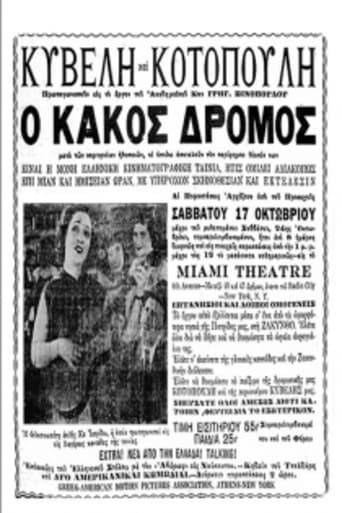
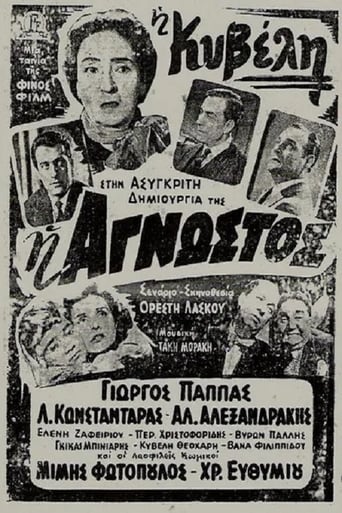
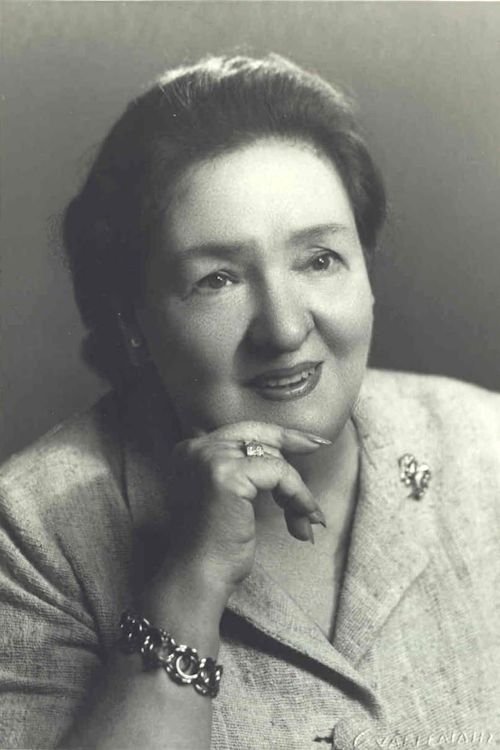
Kyveli (full name: Kyveli Adrianou) (Greek: Κυβέλη Αδριανού, 1888 - 1978), was one of the greatest Greek stage actresses and for many years dominated together with her contemporary Marika Kotopouli. She was born in Smyrna and from her infancy she was under the protection of Demetrios Leonardos (a senior civil servant) and her adoptive parents, the shoemaker Anastasios Adrianou and his wife Maria, who worked at the Leonardou house and who had found the little Kyveli exposed in 1890, with a pendant around her neck that bore her name. Her theatrical talent developed spontaneously in the efforts she made to bring back the smile to her adoptive parents, who had lost their son in Brazil. At the Adrianos couple's house, she was introduced to the speech and recitation teacher M. Sigalas, who, after giving her a series of lessons, led her to her first prize in 1901, a fact that was the reason for changing her parents' plans to make her a dressmaker. At the same time, she enrolled in the newly established Drama School of the Royal Theatre, but after a few months it closed. She was then recruited to the New Stage theater group, where in her first appearance she held the leading role of Juliet in Shakespeare's play "Romeo and Juliet". Her success was followed by other appearances that brought her general theatrical recognition from the public and critics. Since then, she began to rise on the theater stage. In 1906 she created her own troupe with Konstantinos Sayor, which disbanded within a few months due to her departure to Paris. Upon her return, she created her own troupe exclusively, in which she staged many works by important writers. In 1932 and 1934 she collaborated with her established rival Marika Kotopouli, as an artistic reaction to the creation of the newly founded National Theatre. Then, for family reasons, she retired from the stage with only one special appearance in 1942 in Spyros Melas's play "Back to Earth". Kyveli was married three times: first to the great actor Mitsos Myrat, with whom she had Alexander and Miranda Myrat, then to the theatrical entrepreneur Kostas Theodoridis, with whom she had Aliki Nikolaidis-Theodoridis, and finally to the politician George Papandreou (second husband), with whom she had another son, George (whose brother, from a previous marriage, was Andreas Papandreou), who was also her great weakness until her death. As the wife of the Greek Prime Minister, she was for years the epicenter of social life in Athens. Kyveli, together with Marika Kotopouli, became for the theater-loving public the "sacred monsters" of modern Greek theater, dominating for decades. The political beliefs of these actors had also influenced their popularity, especially during the heated period of the National Division, during which their theatrical performances were political events. Venizelists were quick to applaud Kyveli and anti-Venizelists Marika Kotopouli. Their fans often caused incidents when they met after theatrical performances in the Athenian streets. From Wikipedia, the free encyclopedia