Paul Guth
Writing · Born March 5, 1910 · Ossun, Hautes-Pyrénées, France
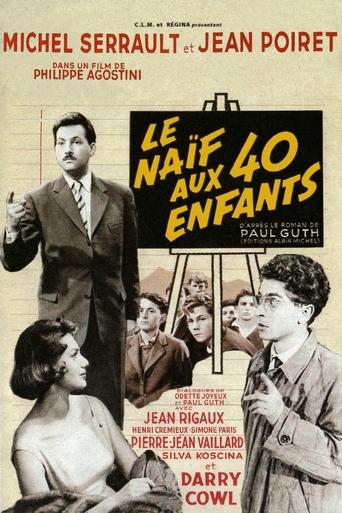
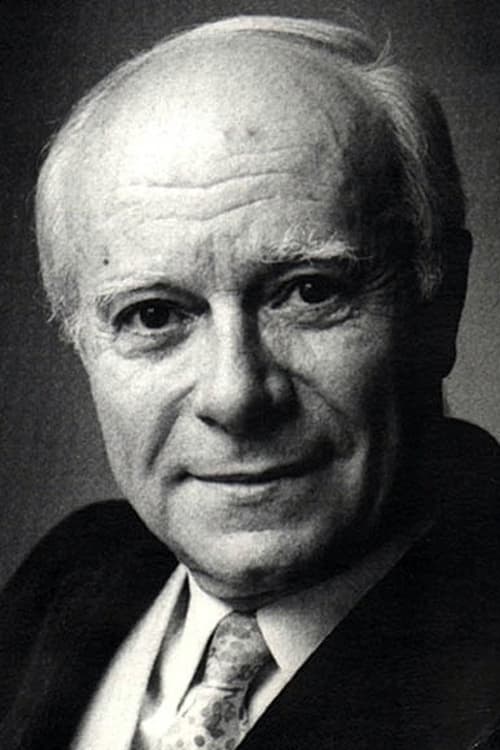
Paul Guth (5 March 1910 – 29 October 1997) was a French humorist, journalist and writer, and the President of the Académie des provinces françaises. A novelist, essayist, columnist, memoirist, historian, pamphleteer, he distinguished himself in every genre with a combination of sensitivity and savagery. He wrote about fifty works on various subjects, ranging from straight history to personal anecdotes, never holding back in criticism of contemporary failings. Paul Guth was born in Ossun on 5 March 1910 to a family of modest means. His parents used to live in Villeneuve-sur-Lot, but his mother, a bigourdane, gave birth to him at her family's hometown of Ossun, in the canton of Hautes-Pyrénées. Guth began his education at Villeneuve-sur-Lot. He studied literature in Paris, where he passed his agrégation in 1933, and pursued an ordinary academic career until the Second World War. He was a teacher for ten years at schools in Dijon and Rouen, as well as at Janson de Sailly in Paris. After the war, Guth devoted himself to literature and journalism, including radio. He won the Prix du Théâtre in 1946 for Fugues. In 1953, Guth published Les Mémoires d'un Naïf ("The Memoirs of a Naïf"), a bestseller which was to be the first in a series of seven volumes. It tells the story of the Naïf ("Simpleton"), a teacher of French who hides a grandiose imagination beneath a naïve exterior. The series comprises Les Mémoires d'un Naïf (1953 – Prix Courteline), Le Naïf aux quarante enfants ("Forty Kids and a Naïf", 1955), Le Naïf locataire ("The Naïf as Lodger", 1956 – Grand prix du roman de l'Académie française), Le Naïf sous les drapeaux ("Naïf at Arms", 1964), Le mariage du Naïf ("The Naïf's Wedding", 1965), Le Naïf amoureux ("The Naïf in Love", 1968) and finally Saint Naïf (1970). The works of Paul Guth include a romantic four-volume series, Jeanne la Mince, published between 1960 and 1969: Jeanne la mince, Jeanne la mince à Paris, Jeanne la mince et l'amour, and Jeanne la mince et la jalousie. This series is told in the first person by a (fictional) young woman, Jeanne la Mince, who grows up in a provincial town in the southwest of France in the years before World War I. In the early 1920s, she leaves that narrow but secure world behind when she goes to Paris and gradually adapts to the very different life there, centering for her and her female compatriots on art, fashion, Dada, dancing, and love affairs. She spends many dissipated years in Paris, and completes her sentimental education before finding love (and jealousy) in the arms of the journalist Paul Bagnac. Occupied for 12 years with historical writing, Guth returned to novels in 1977 with Le Chat Beauté (a pun on "Puss-in-Boots", Le Chat botté). In this book, he takes stock of himself, his relationships with others, and his life. The same year, he published Notre drôle d'époque comme si vous y étiez ("Those Funny Times of Ours; As If You Were There"), a characteristically sarcastic and politically conservative collection of anecdotes about TV, love, religion and many other topics, in which he invites the readers to smile at their own habits and way of life. ... Source: Article "Paul Guth" from Wikipedia in English, licensed under CC-BY-SA 3.0.